The New Forensic Science of Proving What's Real
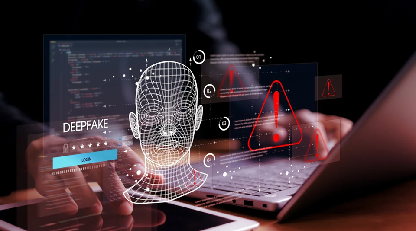
As deepfakes blur the line between truth and fiction, we’ll need a new class of forensic experts to determine what’s real, what’s fake and what can be proved in court
By Deni Ellis Béchard edited by Eric Sullivan
Imagine this scenario. The year is 2030; deepfakes and artificial-intelligence-generated content are everywhere, and you are a member of a new profession—a reality notary. From your office,
All four are at stake on a rainy Monday when an elderly woman tells you her son has been accused of murder. She carries the evidence against him: a USB flash drive containing surveillance footage of the shooting. It is sealed in a plastic bag stapled to an affidavit, which explains that the drive contains evidence the prosecution intends to use. At the bottom is a string of numbers and letters: a cryptographic hash.
The Sterile Lab
Your first step isn’t to look at the video—that would be like traipsing through a crime scene. Instead you connect the drive to an offline computer with a write blocker, a hardware device that prevents any data from being written back to the drive. This is like bringing evidence into a sterile lab. The computer is where you hash the file. Cryptographic hashing, an integrity check in digital
Next you create a copy and hash it, checking that the codes match. Then you lock the original in a secure archive. You move the copy to a forensic workstation, where you watch the video—what appears to be security camera footage showing the woman’s adult son approaching a man in an alley, lifting a pistol and firing a shot. The video is convincing because it’s boring—no cinematic angles, no dramatic lighting. You’ve actually seen it before—it recently began circulating online, weeks after the murder. The affidavit notes the exact time the police downloaded it from a social platform.
Watching the grainy footage, you remember why you do this. You were still at university in the mid-2020s when deepfakes went from novelty to big business. Verification firms reported a 10-fold jump in deepfakes between 2022 and 2023, and face-swap attacks surged by more than 700 percent in just six months. By 2024 a deepfake
Related Articles
Lawyer Says Cash, 74 Kg of Gold Do Not Belong to Febrie Adriansyah
Former Deputy Attorney General Febrie Adriansyah, through his lawyer Hotman Paris, firmly denies ownership of the 74 kg of gold and millions …
Read more
Indonesia Bars Ex-Prosecutor Febrie Adriansyah From Leaving the Country
The Indonesian government has officially imposed a six-month travel ban on former prosecutor Febrie Adriansyah, preventing him from leaving the country. The …
Read more
KPK Demands 8 Years in Prison for Former Garuda Boss
KPK seeks 8-year sentence, $1 billion fine, and $86 million in restitution for Emirsyah Satar over corruption in aircraft procurement that caused …
Read more